Why Global Websites Accept Foreign Cards but Reject Overseas Billing Addresses
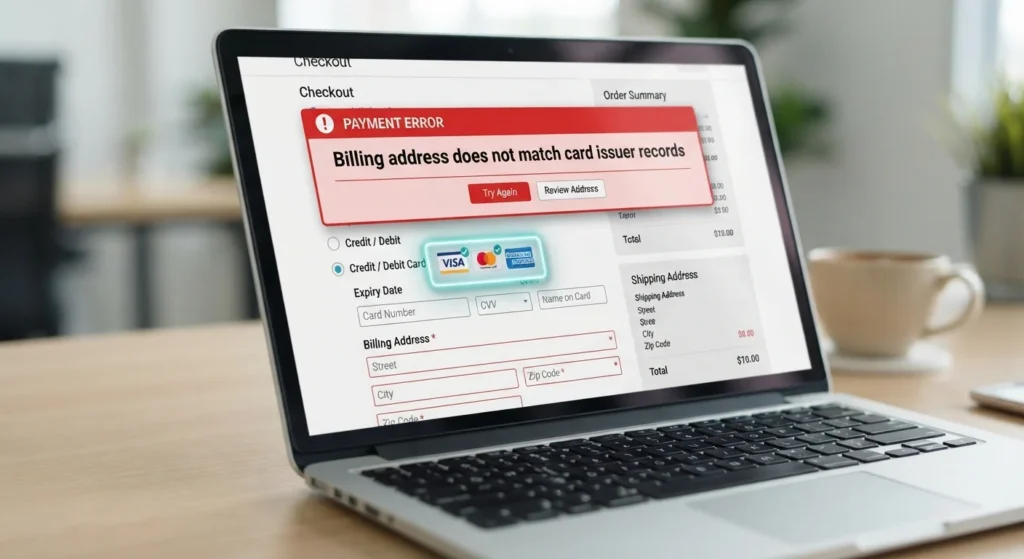
When shopping or subscribing to services on international websites, many consumers run into a frustrating scenario. The platform accepts their international credit or debit card (Visa, Mastercard, Amex), but the moment they click to complete the checkout, the transaction fails with a Billing Address Error. Despite having a valid card, a sufficient balance, and active online payment features, the order is instantly declined. This issue stems from automated financial risk controls, inconsistencies across global banking networks, and strict anti-fraud policies set by international merchants.
Why Does a Valid Card Get Declined for Billing Address Mismatch?
To understand why transactions get blocked, you must distinguish between two separate checks: card payment authorization and cardholder identity verification.
What Is the Address Verification System (AVS)?
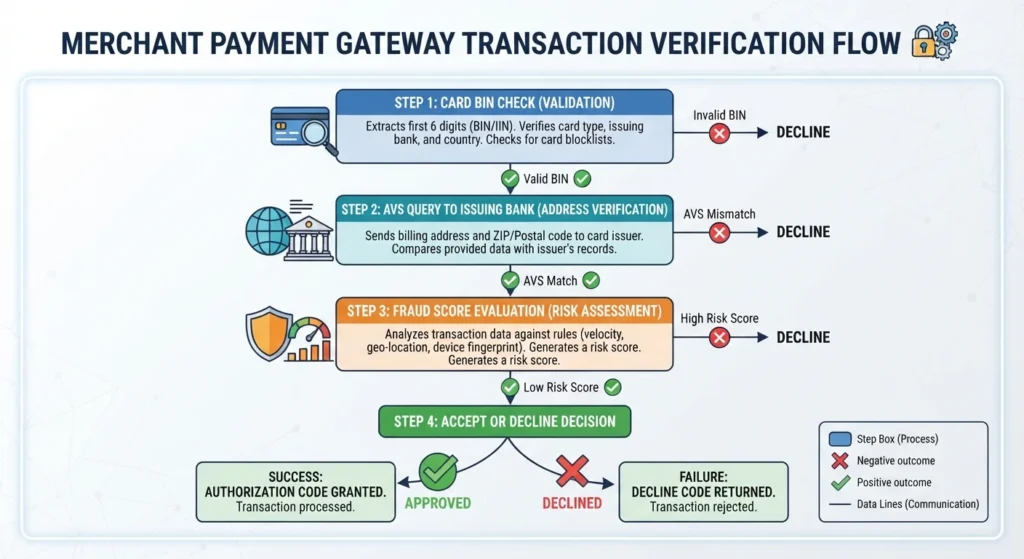
The Address Verification System (AVS) is a fraud prevention mechanism developed by international card networks. When you enter billing details, the merchant’s payment gateway extracts two key pieces of data: the Street Number and the ZIP or Postal Code. It sends a verification query to your card-issuing bank.
If the numbers you enter match the records on file with your bank, the transaction passes verification. Conversely, if there is a discrepancy or if the address belongs to an unsupported country, the e-commerce system automatically triggers a decline.
Conflict Between International Card BINs and Anti-Fraud Filters
Every credit or debit card features a Bank Identification Number (BIN) the first 6 to 8 digits on the card which identifies the issuing bank and country. Many global websites deploy strict risk rules: if your card BIN indicates an origin outside their supported regions, but you select a domestic billing address to bypass the system, the payment processor flags the attempt as a High-Risk Transaction and cancels the checkout.
Technical Barrier: AVS Inconsistency Across Global Issuing Banks
A little-known technical reality is that AVS functions seamlessly primarily between domestic banks in the United States, Canada, and the United Kingdom. Most financial institutions outside these markets have not integrated automated, standardized AVS response codes into international payment gateway networks. Consequently, when a gateway queries a foreign bank for AVS validation, the bank often returns a “Not Supported” or “Unavailable” status code. Many online stores configure their checkout rules to reject any transaction returning this response.
4 Main Reasons Merchants Block Foreign Billing Addresses
Beyond technical factors, merchants deliberately restrict billing address regions for strategic business reasons:
- Cross-Border Fraud Prevention: Transactions where the billing address does not match the merchant’s home country carry significantly higher chargeback and credit card fraud rates compared to domestic orders.
- Regional Licensing and Distribution Restrictions: Digital content, software licenses, and luxury fashion brands are frequently bound by regional distribution contracts. Merchants enforce billing address restrictions to prevent cross-border sales outside authorized territories.
- Regional Price Discrimination: Companies often apply regional pricing tiers based on local market dynamics. Enforcing local billing addresses stops users from changing locations to buy items at lower foreign exchange rates.
- Default Payment Gateway Settings: Small and mid-sized online businesses often use gateways like Stripe, Shopify Payments, or Adyen without enabling international AVS bypass settings in their administrative dashboard.
5 Actionable Solutions When Blocked by Billing Address Errors
If you encounter a billing address decline, apply these five proven workaround strategies:
Use Digital Wallets as Intermediaries (PayPal, Apple Pay, Google Pay)
Digital wallets offer the most reliable way to bypass AVS hurdles. When paying through PayPal, Apple Pay, or Google Pay, the wallet acts as a trusted intermediary. The merchant receives a secure payment token rather than querying your card’s billing address directly against foreign bank databases, bypassing strict AVS prompts.
The ZIP Code Matching Trick for US Merchants
When shopping on US platforms that require a 5-digit US ZIP code but accept foreign cards, you can apply the standard international ZIP code conversion formula:
- Take the numeric digits from your actual home postal code.
- Add zeroes to the end until you reach a total of 5 digits.
- Example: If your local postal code is 70000, use 70000. If your code is 123, append two zeroes to form 12300. The AVS clearing system used by several major card processors automatically validates this specific numeric format for foreign accounts.
Register for an International Virtual Credit Card (VCC)
International Virtual Credit Card services allow users to attach customized billing addresses (including US or European addresses) to their virtual cards. You simply top up the virtual card balance and enter a billing address that matches your designated delivery address.
Use Freight Forwarding Shipping Addresses Correctly
If you utilize a freight forwarding service to ship packages internationally, set the warehouse address as your Shipping Address. For the Billing Address field:
- If the website includes your home country in its billing dropdown menu, enter your true home address registered with your bank.
- If your country is missing from the dropdown, input the freight forwarder’s address for both Shipping and Billing, ensuring your actual name remains on the cardholder field.
Solution 5: Request Manual Payment Approval via Customer Support
For high-value purchases or critical services, reach out to the merchant’s customer support via Live Chat or Email. Offer to submit a redacted bank statement showing your name and address (with sensitive card numbers hidden). Support agents can manually whitelist your account or send a manual payment invoice link that overrides AVS checks.
Why You Should NOT Use Fake Addresses & How Pending Charges Work
Entering a random address generated from Google Maps as your billing address introduces severe security and financial risks:
- Permanent Account Bans: E-commerce fraud protection engines flag accounts using mismatched or random addresses, leading to blacklisted IP addresses and banned accounts.
- Refund Complications: If an order is canceled or returned, refunds can become stuck in administrative holds requiring verification documents you cannot provide.
- Authorization Holds (Pending Charges): When a billing address error occurs, your mobile banking app might still send a notification showing funds deducted. Do not panic this is an Authorization Hold. Because the merchant rejected the transaction during final AVS settlement, your bank will automatically release the held funds back into your account within 7 to 30 business days.
FAQ
1. Why does my credit card work fine on other international sites but get rejected on this specific store?
Risk configurations vary significantly across online stores. Some merchants relax AVS rules to maximize checkout conversion rates, whereas others particularly electronics retailers, software providers, and luxury fashion brands enforce strict AVS compliance and block all non-domestic billing profiles.
2. Does AVS work with non-US / international bank cards?
Most banks operating outside North America and Western Europe do not support automated real-time AVS numerical verification queries. When a merchant’s payment gateway queries an unsupported foreign bank, the response returns as “Unavailable,” prompting strict automated checkout systems to decline the purchase.
3. Can I use a freight forwarder’s address as my billing address?
You can attempt using your freight forwarder’s address as your billing address if your home country is missing from the merchant’s country selection menu. However, if the merchant maintains an updated blacklist of commercial freight forwarding addresses, the transaction may still be flagged and canceled automatically.
4. Will I lose my money if the store shows a billing error but my bank sent a payment SMS?
No, your money is not lost. The text message or notification reflects a temporary Authorization Hold initiated by your card issuing bank. Because the merchant declined the charge at checkout due to an AVS error, the transaction will not settle, and your bank will automatically restore your balance within a few business days.