Differences Between Diplomatic Statements, Policy Documents, and Media Summaries
When an international event occurs, the wording can change significantly depending on where you read about it. A foreign ministry may issue a brief statement using carefully selected verbs. A government may publish a lengthy strategy or policy paper. A news organization may summarize both documents in a headline and several paragraphs. These versions are not interchangeable. A diplomatic statement communicates an official position at a particular moment.
A policy document explains intended direction, proposed measures, or administrative priorities. A media summary reports and interprets information for an audience that may not read the original material. Understanding these differences helps readers avoid two common mistakes: treating cautious diplomatic wording as meaningless and treating a government proposal as if it were already law.
Direct Comparison of the Three Types of Diplomatic and Media Communications
The three formats differ in purpose, audience, authority, publication process, and level of detail. These differences are general patterns rather than fixed rules.
Comparing Core Purpose
Diplomatic Statements: Communicate a government’s position to foreign governments, international organizations, domestic audiences, journalists, and the wider public. The U.S. Department of State, for example, describes the mission of its spokesperson’s office as communicating foreign-policy objectives to audiences both inside and outside the country.
A statement may condemn an action, welcome an agreement, announce a meeting, request restraint, explain a vote, or signal that further action is being considered. It can be conciliatory or forceful depending on the circumstances.
Policy Documents: Present government priorities, proposals, strategies, or implementation plans. The category covers different materials, including white papers, national strategies, policy frameworks, consultation papers, directives, and departmental plans.
Their legal effect varies. A strategy may guide agencies without creating enforceable rights. A white paper may propose future legislation but does not automatically change the law. The UK Parliament defines white papers as government policy documents that set out proposals, often before a bill is formally introduced.
Media Summaries: Report what happened, explain why it matters, and place new information in context. A summary may draw from statements, policy documents, interviews, public records, expert analysis, and previous reporting. It is a journalistic product rather than an official government position.
Comparing Language Style and Tone
Diplomatic Statements: Often use controlled language because small differences in wording can signal different levels of approval, concern, or commitment. Terms such as “welcome,” “note,” “condemn,” “urge,” and “remain concerned” should not be treated as synonyms.
Not every statement is vague. Governments sometimes use direct language when announcing sanctions, responding to attacks, recognizing an election result, or setting a public condition.
Policy Documents: Usually use administrative, legal, economic, or technical language. They may define objectives, responsible agencies, timelines, risks, consultation procedures, and proposed legislative changes. The level of detail depends on the document type.
A national strategy can remain broad, while an implementation plan may contain measurable actions. A policy paper should not be assumed to contain a confirmed budget unless it expressly identifies funding.
Media Summaries: Use shorter sentences and less specialist language so readers can understand the issue without reading the complete source material. Strong professional standards do not require sensational wording. Reuters warns that exaggeration can distort reality, while the Associated Press identifies accuracy and freedom from distortion as core principles.
Comparing Rhythm and Transparency
Diplomatic Statements: May be issued within hours of an event, after internal review, or following coordination among several governments. Timing depends on the sensitivity of the issue and whether the parties need to agree on joint wording. U.S. State Department rules require official press statements to pass through an approval process.
Policy Documents: Often require more research and consultation, but preparation time varies. An emergency policy can appear quickly, while a national strategy or white paper may take months. Publication does not guarantee complete transparency; governments may omit intelligence, operational plans, negotiating positions, or security-sensitive information.
Media Summaries: Can appear during a live event or after extensive investigation. Breaking-news reports are updated quickly, while explanatory and investigative articles may take weeks or months. Transparency depends on whether the article identifies its sources, links to primary material, distinguishes fact from analysis, and explains what remains unknown.
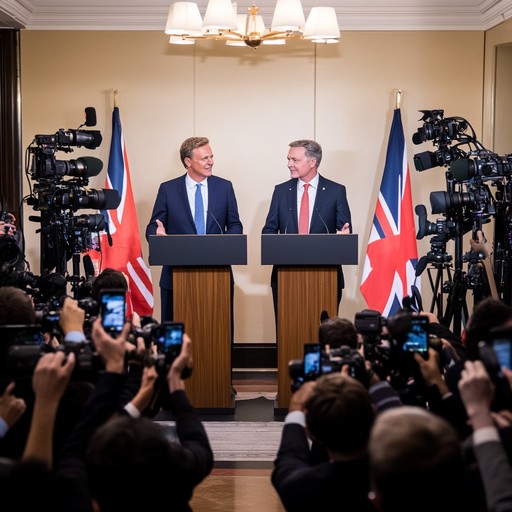
The Nature of Diplomatic Statements: Why Do They Use Ambiguous Language?
Diplomatic wording may appear indirect because statements often serve several audiences simultaneously. A government may need to address another state, reassure allies, avoid alarming markets, respond to domestic criticism, and preserve room for future negotiations.
Ambiguity is therefore one possible diplomatic technique, not a universal rule. Some statements are deliberately flexible, while others are precise because the government wants to remove doubt.
The Golden Rule of Diplomatic Reporting and Statements
There is no formally recognized “golden rule” stating that every diplomatic word creates a binding commitment. Public wording still matters because other governments, journalists, investors, and courts may compare it with previous positions.
Before interpreting a phrase, readers should examine who issued it, whether it was a unilateral or joint statement, and whether it announces an action or only expresses a view. A foreign ministry spokesperson’s comment does not necessarily carry the same authority as a signed treaty, enacted law, executive order, or binding resolution.
The safest approach is to read the exact wording without assigning it greater legal force than the document actually possesses.
Calculated Ambiguity – A Weapon to Protect Negotiations
Constructive or calculated ambiguity describes the deliberate use of wording that allows parties with different positions to accept the same text. Researchers have identified this technique in international negotiations and United Nations Security Council drafting.
It can help parties postpone a divisive question and continue discussions on areas where agreement is possible. However, ambiguity is not automatically constructive. Different interpretations may later produce disputes over implementation. Readers should therefore ask whether flexible wording represents a workable compromise, a temporary postponement, or an unresolved disagreement.
The Nature of Policy Documents: A Nation’s Strategic Backbone
Policy documents show how a government describes a problem and what it intends to do about it. They are valuable primary sources, but they differ widely in authority.
A law, regulation, white paper, consultation document, national strategy, and departmental action plan should not be treated as equivalent. The document title, issuing institution, legal basis, publication status, and implementation mechanism all matter.
Function in Shaping National Actions and Commitments
A policy document may:
Identify government priorities.
Propose new legislation or regulation.
Assign work to ministries or agencies.
Describe funding plans or administrative changes.
Set targets, deadlines, or review procedures.
Not every document contains all these elements. A white paper may remain open to consultation, while an executive directive may require agencies to take specific action. A strategy may influence government behavior without legally guaranteeing that every target will be achieved.
Readers should look for wording such as “will introduce,” “proposes,” “intends,” “will consult,” or “subject to parliamentary approval.” These phrases indicate different stages of decision-making.
The Difference Between Policy Intent and Outcome Evaluation
A policy target is not evidence that the target has been met.
Policy Intent: States what the government proposes, expects, or aims to accomplish.
Implementation: Shows whether legislation, funding, staffing, regulations, and administrative systems have been put in place.
Outcome: Measures what changed after implementation.
For example, a commitment to reduce emissions by a certain date is a target. Evidence of progress comes from later legislation, budget records, regulatory data, independent audits, and measured emissions.
Political changes, court decisions, budget constraints, economic conditions, or administrative delays can alter implementation. Readers should compare the original document with later progress reports rather than judging success from the announcement alone.
The Nature of Media Summaries: Why Is the News More Dramatic Than Reality?
Some headlines are more forceful than the source material, but it is inaccurate to assume that journalism always makes events more dramatic. Reputable newsrooms require reporters to verify information, avoid distortion, and separate reporting from unsupported opinion.
Differences often arise because a headline must summarize the most newsworthy development in limited space. A media report may also include context absent from the official statement, such as previous disputes, expert reactions, market effects, or contradictory evidence.
Pressure from the “Attention Economy”
Digital publishers compete for readers, but commercial pressure does not excuse misleading coverage. News organizations use headlines, alerts, summaries, and social-media posts to communicate quickly. These formats can remove qualifications that appear later in the article.
Readers should compare the headline with the article body before deciding that the report contradicts the primary source. They should also distinguish a straight news report from analysis, commentary, an editorial, or an opinion column.
Media Framing Theory
Media framing refers to selecting and emphasizing certain aspects of an issue. Robert Entman’s influential account explains framing through choices that make particular elements more prominent in a communication. Framing is unavoidable because no article can include every available fact. It becomes misleading when significant context is omitted, uncertainty is hidden, or a preliminary development is presented as final.
Two accurate reports can frame the same event differently: one may focus on diplomatic consequences, while another examines economic impact. Different emphasis does not by itself prove that either report is false.

Conflict and Complementarity Between Journalism and Diplomacy in International Events
Journalism and diplomacy perform different roles, but each relies on the other.
| Dimension | Diplomatic Sphere | Media & News Sphere |
|---|---|---|
| Primary Goal | Communicate positions, manage relations, negotiate, and protect national interests | Inform the public, verify claims, provide context, and hold institutions accountable |
| Cadence | May be immediate or delayed by consultation and approval | Ranges from live reporting to long-term investigation |
| Mutual Impact | Uses public communication to signal intentions and explain policy | Uses official documents as sources while seeking additional evidence and reactions |
Tension may arise when journalists publish confidential negotiations or when governments withhold information in the name of diplomacy. At the same time, independent reporting can reveal facts omitted from official accounts, while official documents allow journalists and readers to evaluate whether a headline accurately represents the government’s words.
A Non-Expert’s Guide to Understanding International News
Use this three-step process when a headline concerns a diplomatic dispute or government announcement:
Identify the Document Type:
Determine whether the source is a press statement, speech, treaty, law, white paper, strategy, consultation document, news report, analysis, or opinion piece.
Phrases such as “according to people familiar with the matter” indicate reliance on unnamed sources, but they do not make a report unreliable by themselves. The AP permits anonymous sourcing only under defined conditions, including reliability, direct knowledge, and editorial approval.
Locate the Primary Source:
Search for the exact title, issuing institution, publication date, and document number. Do not rely solely on a .gov ending because official domain systems differ by country. Verify the site through the government institution’s known portal and compare more than one authoritative source when necessary.
Analyze Context and Conditional Phrasing:
Separate completed actions from proposals. “Passed a law” is different from “published a consultation.” “Imposed sanctions” is different from “considering sanctions.” “Condemned” is stronger than “expressed concern,” but neither phrase alone explains what practical action will follow.
$$IMAGE 4$$
Search Keyword: Primary source international news verification workflow
Alt Text: Workflow showing how to identify a document type, locate the original source, and compare its wording with a news report.
AI Image Prompt: Clean fact-checking flowchart with three stages: identify the document type, locate the official primary source, and compare exact wording with the news report. Professional editorial design with a document icon, magnifying glass, and side-by-side text comparison.
Diplomatic statements, policy documents, and media summaries answer different questions. A diplomatic statement shows what a government is prepared to say publicly at a particular moment. A policy document describes intended direction, proposals, or administrative plans. A media summary reports the development and connects it with evidence, reactions, and wider context. None should be read in isolation when the details matter. Start with the news report for an overview, open the original statement or policy document, and then check whether the action is proposed, authorized, funded, implemented, or completed. That distinction is often more important than the headline itself.